Michelle Dukart
EDUC 333 Fall 2007
Lesson Plan 3
1. Theme/title of the day’s lesson with a brief description:
-Heroes, Firefighters of the Past and Present
-Class discussion about field trip.
-Discuss article assigned as homework.
-Compare pictures of firefighting equipment of the past and present.
2. Materials/ resources needed:
-Firefighters: Winona’s Front Line article, classroom set read as homework
-Fire Engine is Restored article, 1 per group of 3 students
-Old Hand Pumper Becomes a Relic article, 1 per group of 3 students
-3 pictures of old fire equipment and accompanying articles from the Winona Historical Society, 1 set per group of 3 students
-4 pictures of new fire trucks and relating paragraphs, 1 set per group of 3 students
3. Goals for today’s lesson:
-Students will understand how families/communities live and operate today and in the past, and recognize how and why things change and the role of technology in those changes.
-Students will understand the importance of cooperation in a community and explain how people can make a difference in others’ lives.
-Understand that learning about past and present can be done by studying different sorts of evidence.
-Learn to compare different kinds of historical sources and describe the different sorts of information the sources provide.
4. Objectives for today’s lesson:
-Students understand the importance of firefighters in their communities.
-Students understand various roles of firefighters.
-Practice categorizing similarities and differences of objects.
-Practice using resources to find definitions of words.
5. Procedures:
a. Introductory experiences: (10 minutes)
-Thank students for being so well behaved on the field trip to fire station and give feedback on what they can do better next time.
-Ask students what they liked/disliked about the trip.
-Ask students what they learned/found interesting during the trip.
b. Developmental experiences:
- (10 minutes) Discuss article “Firefighters: Winona’s front line” assigned for homework. Discuss things they found interesting/surprising/what emotions did they feel while reading the article.
-Discuss unfamiliar vocabulary in article (students were supposed to look up 3 words they didn’t know from article, write the words and definitions on a handout), share definitions.
-Discuss big themes in article: daily lives of firefighters, we forget that there are people with lives/families in fire trucks, women firefighters, dangerous job (this discussion will lead to respect and appreciation for firefighters). Relate to what was seen on field trip.
-(15 minutes) Divide class into groups of 3, give pictures/articles to each group (Fire Engine is Restored article, Old Hand Pumper Becomes a Relic article, 3 pictures of old fire equipment accompanied by their articles, and 4 pictures of new fire trucks and relating paragraphs).
-Teacher explains definition and examples of similarities and differences. Each group comes up with similarities and differences between the pictures of old firefighting equipment and new firefighting equipment. Students also will draw conclusions about technology level when old pictures were taken (horses or people were the “engines”). Groups must list their findings. Class comes back together to discuss what each group found and make a class board where students can list their findings of similarities and differences.
-Class discussion on how technology has changed and what impact it has had on firefighters. Talking points may include the invention of engine and taller buildings built that need fire trucks to reach higher levels.
c. Culminating experiences: (5 minutes)
-Ask students to think about how firefighters are community heroes. Ask students to share any thoughts they have about it. Ask students if someday they would like become firefighters.
-Homework for students: Count how many fire detectors are present in their homes and where they are located. This will go into fire safety lessons for the rest of the week.
6. Assessment:
-In the wrap up asking students to share thoughts about how firefighters are community helpers; their answers will show if they’ve gained an understanding and appreciation for the firefighting profession.
Firefighters: Winona's Front Line article


Old Hand Pumper Becomes A Relic article:

Fire Engine is Restored article:


Old Firefighting Equipment at Winona Historical Society:


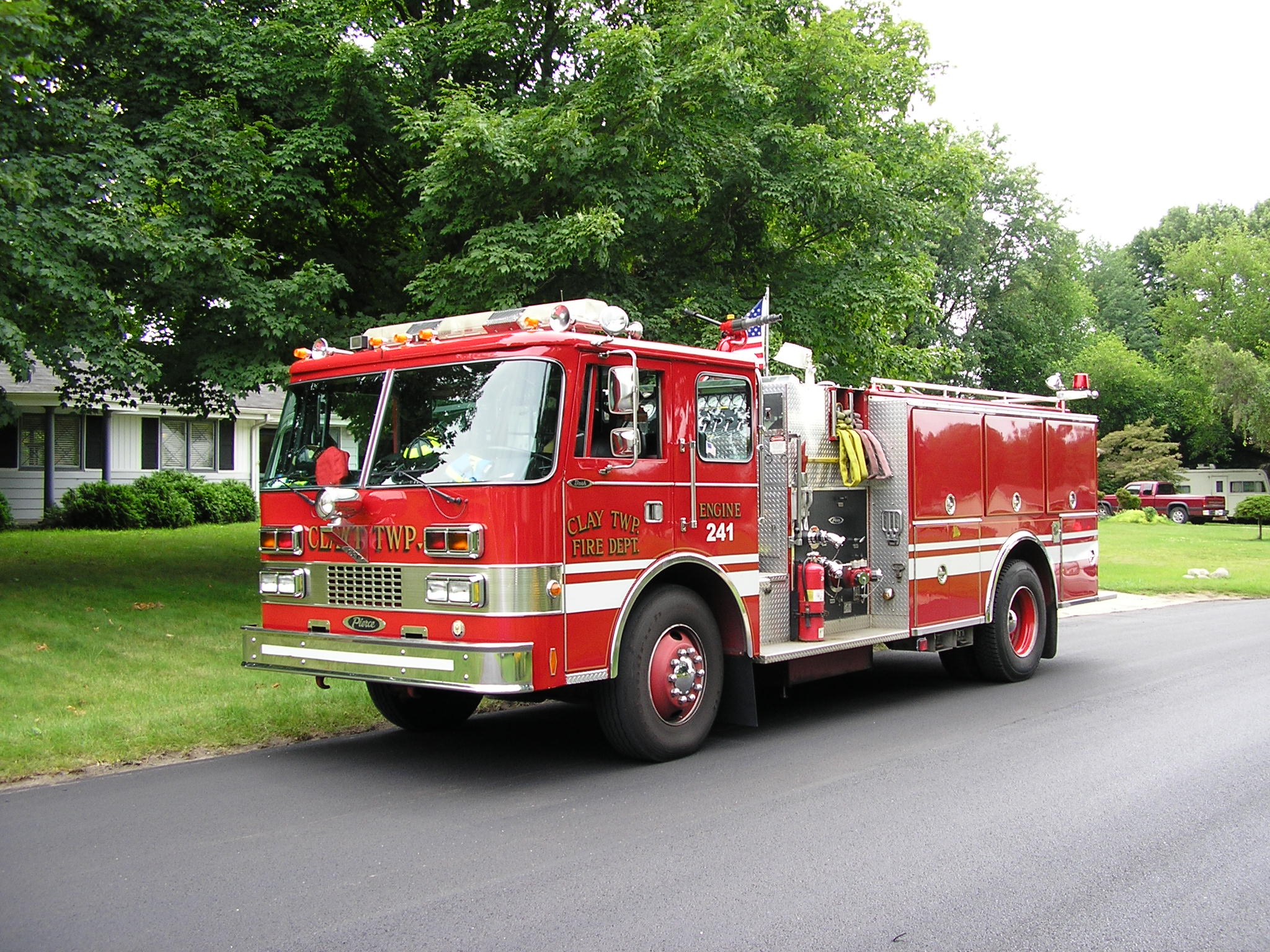
New Fire Engines
Fire Engine
A fire engine or pump is designed to pump water mechanically, usually using an engine, to extinguish fires. They may have an on-board water reservoir, allowing it to fight a fire immediately upon arrival, or may be completely reliant on external sources, such as fire hydrants, water tender, and any other available water source, such as a river or reservoir.
Turntable (Aerial) Ladder
The turntable ladder, also known as an aerial ladder, or sometimes abbreviated to simply TL is the best-known form of specialized fire apparatus (sometimes known as a fire truck), and is used to gain access to fires occurring at height, where conventional ladders carried on other appliances might not reach. 
Hydraulic platforms
A hydraulic platform, also known as articulating booms, snorkels, platform trucks or sometimes shortened to just HP, is a specialized aerial work platform designed for firefighting use. They have a number of functions, which follow the same principles as the turntable ladder, providing high level access and elevated water pump positions.

Water tenders
A water tender, which can also be known as a tanker truck or water bowser is a specialist fire appliance with the primary purpose of transporting large amounts of water to a scene. These are especially prevalent in rural areas where fire hydrants are not readily available.

A tanker giving water to the hydraulic platform vehicle.


No comments:
Post a Comment